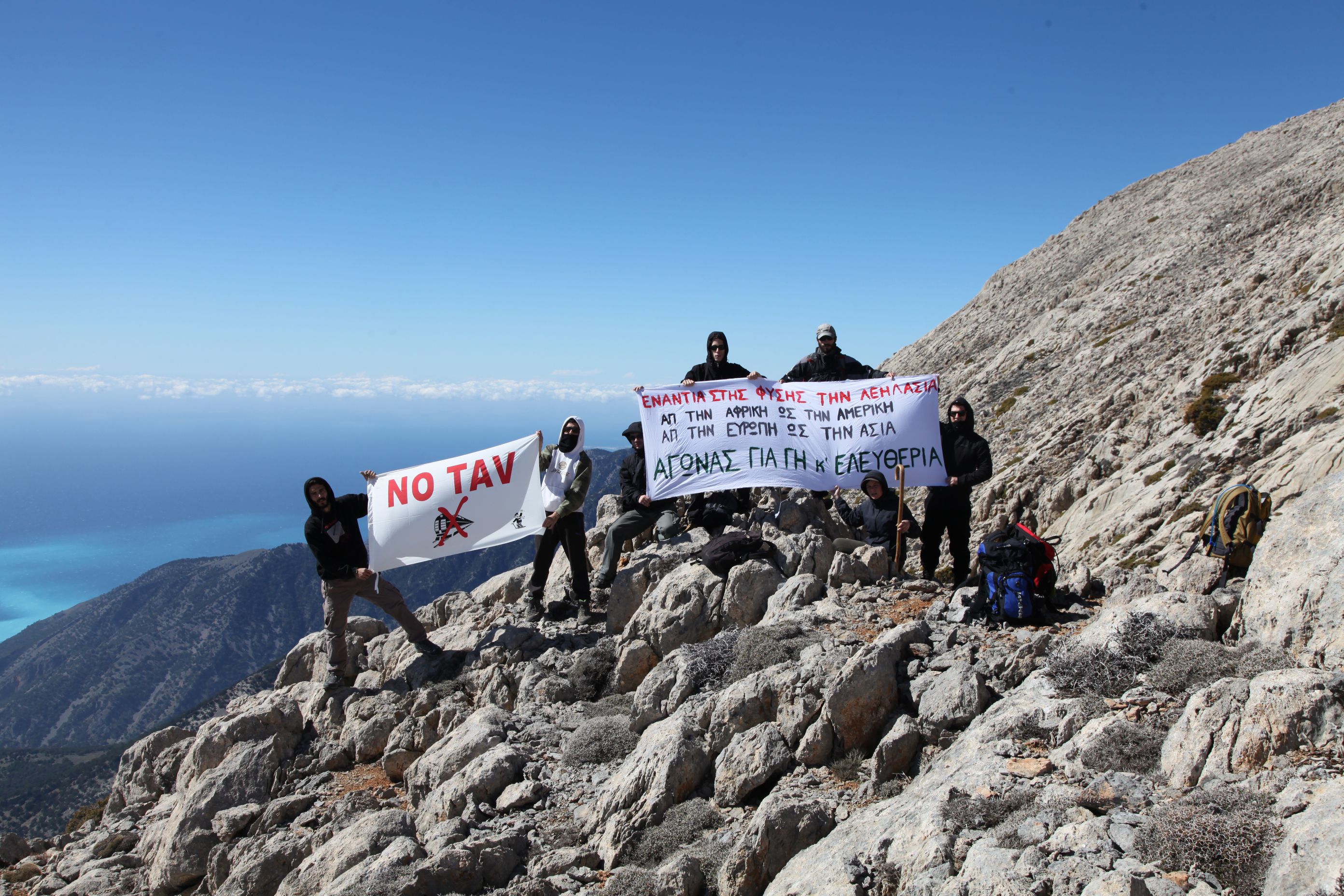
A showcase of work in Crete developed by the Department of Sociology, University of Crete and led by Dr Hara Kouki. This work has investigated how Crete has been positioned as a vital hub in the Mediterranean amid the broader corridor-led transformation of the region through new energy projects, inflows of tourists and a series of investments, plans and future visions.
Team


Crete as an Infrastructure Hub: Mapping Infrastructure Investments and Competing Discourses on the Island
Giannis Vasilakis/ Hara Kouki
October 2024// Background Report
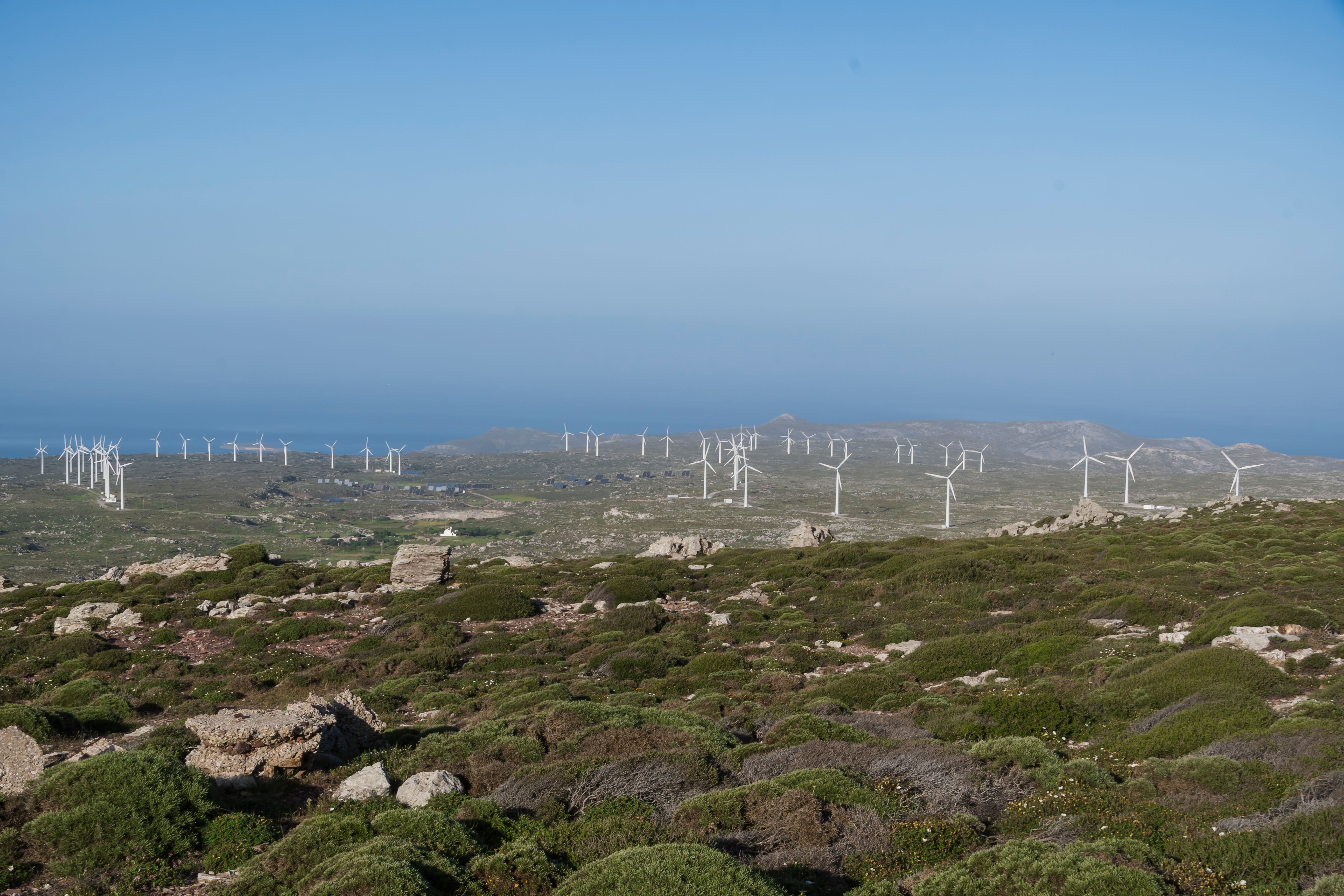
Examining Crete’s emerging role as an infrastructure hub within wider Mediterranean and European corridors. It maps major projects planned or underway on the island, including electricity interconnections with mainland Greece and international energy links, hydrocarbon exploration, large-scale renewable energy investments, the Northern Road Axis, the new Kastelli airport, ports, tourism infrastructure and data centres. It also analyses the competing discourses that frame these developments: official narratives of energy security, green transition, economic development and geopolitical upgrading, alongside local and environmental critiques concerning land transformation, ecological damage, privatisation, democratic deficit, unequal socio-spatial effects, and the geopolitical risks of energy corridor-making in the Eastern Mediterranean.
Mapping Environmental Initiatives in Crete: Energy, Water, Tourism and Infrastructural Conflicts
April 2026// Background Report
Maria Tamvaki/Hara Kouki
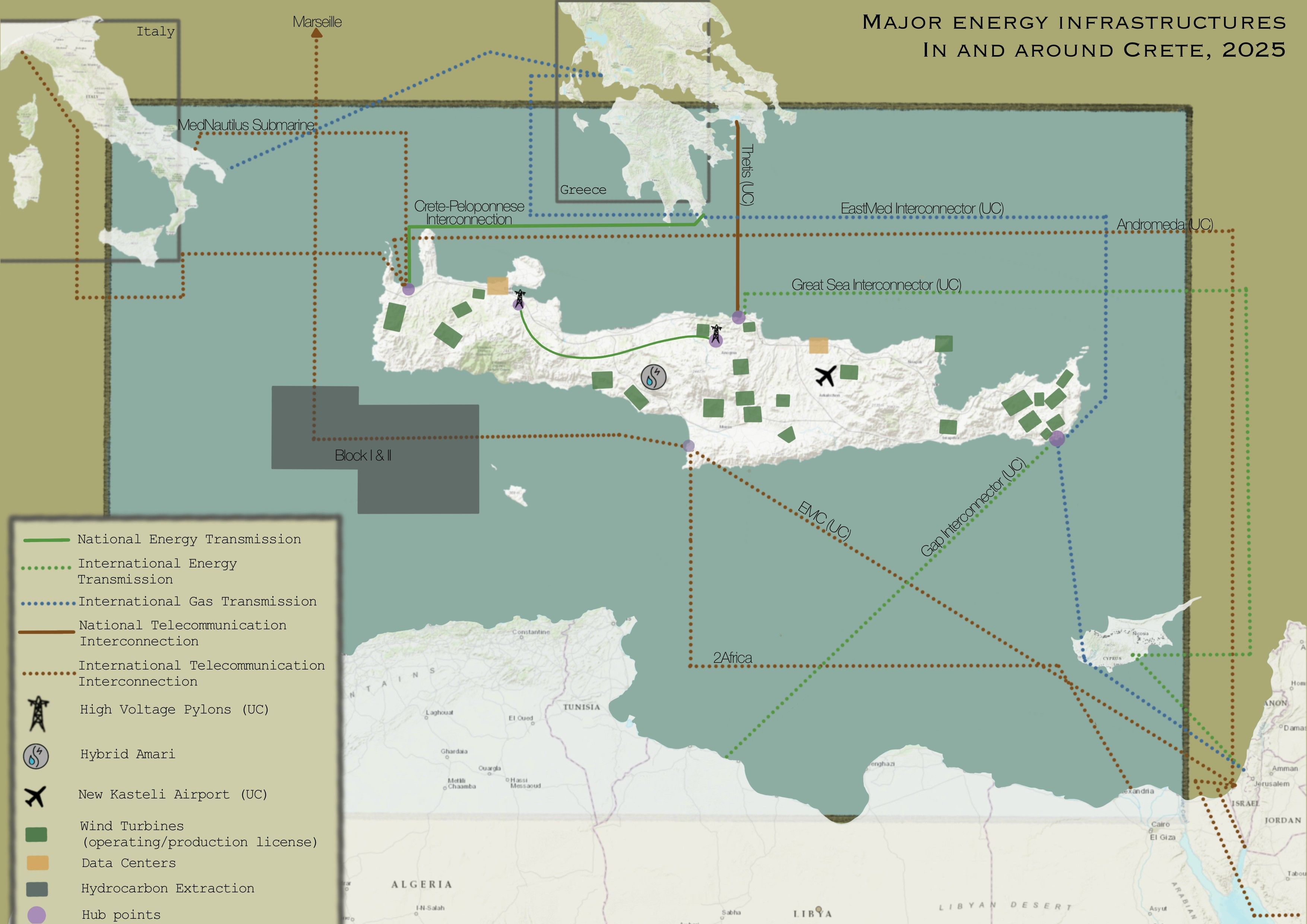
This report maps contemporary environmental movements and initiatives across Crete. It traces how local conflicts over energy, water, tourism and infrastructure form a wider field of environmental action. It focuses on contemporary initiatives against hydrocarbon extraction, industrial-scale renewables, high-voltage pylons, water privatisation, overtourism, the new Kastelli airport and related development projects. The report highlights their spatial distribution, forms of action and interconnections across villages, municipalities and island-wide networks. Rather than remaining isolated reactions to separate projects, place-based struggles become increasingly articulated as pan-Cretan critiques. These critiques address large-scale investment, resource extraction and Crete’s repositioning within wider energy and infrastructure corridors in the Eastern Mediterranean.
Energy Transition, Local Resistance and Alternative Development Imaginaries in Agios Vasileios, Crete
December 2024// Background Report
Giannis Vasilakis/ Hara Kouki
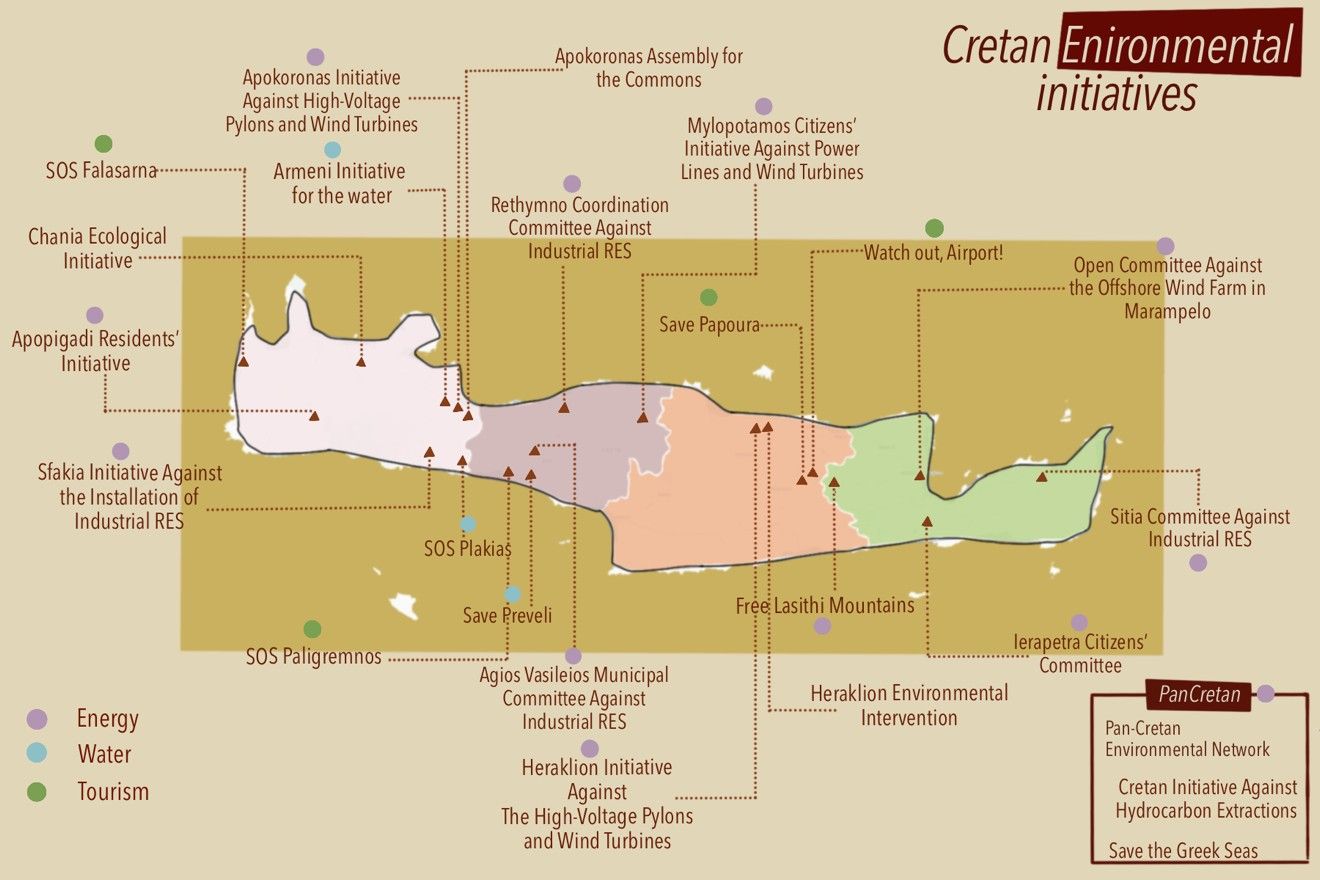
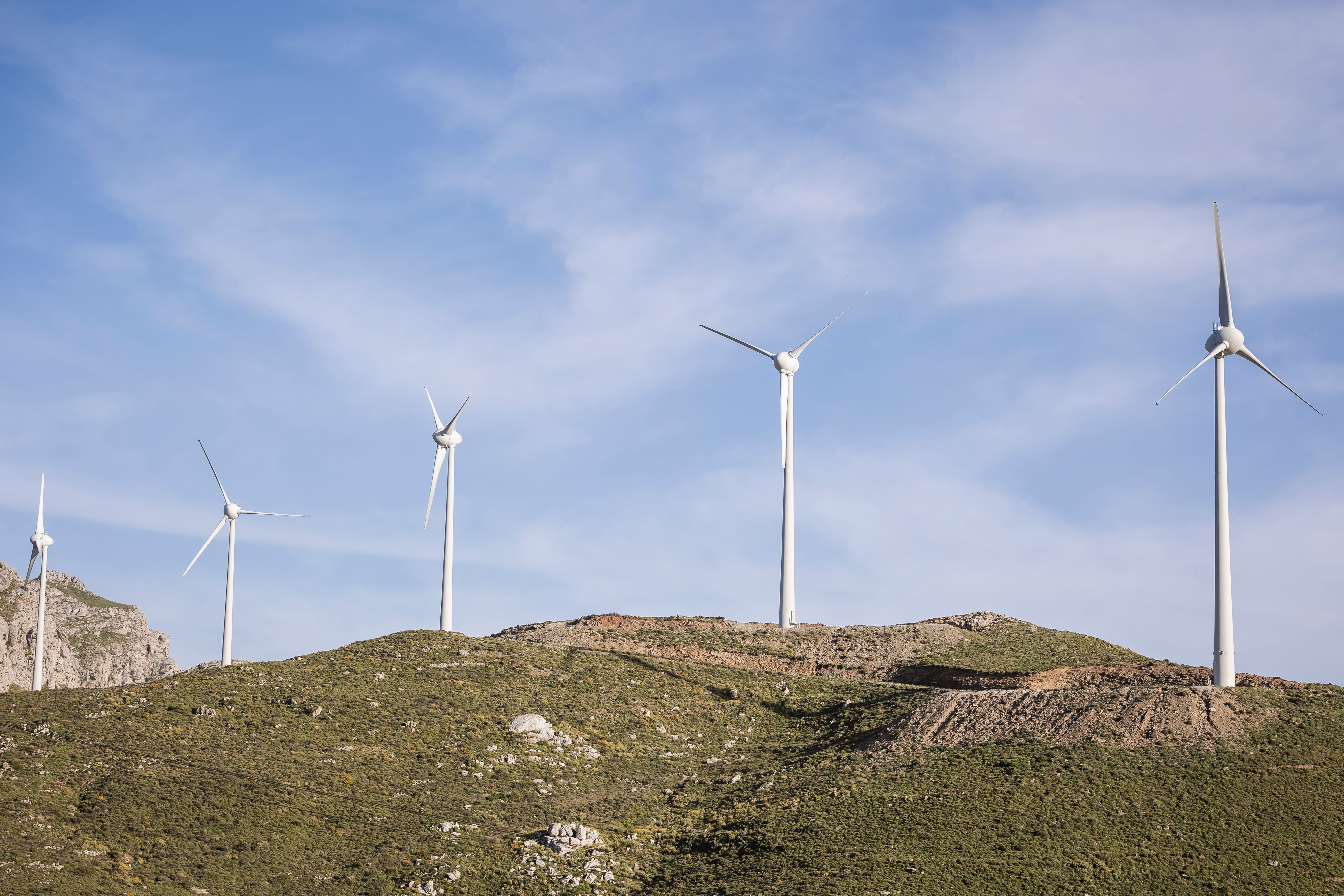
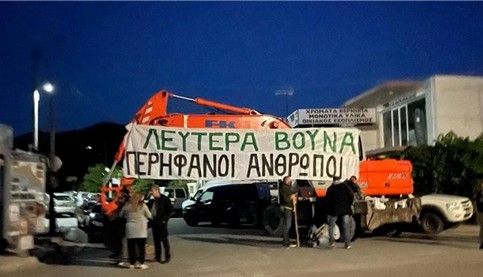
The report asked how the energy transition is experienced from the perspective of communities located at the margins of large infrastructure corridors. It examined how residents interpret wind energy projects, how they understand the wider transformations affecting their place, and how alternative ideas of development emerge through conflict. The Agios Vasileios case shows how wind-energy investments become conflicts over land, livelihood, democratic planning and the future of rural life. Based on interviews and participant observation, the brief traces how residents moved from initial acceptance to organised opposition. It shows how the struggle against industrial-scale renewables produced alternative visions of infrastructure, development and community life.
Investment-Hosting Sites in the Energy Transition: A Study of Green Development through Wind Installations in South Rethymno
December 2024// MA Thesis
Giannis Vasilakis
This MA thesis uses the case of Agios Vasileios in southern Rethymno to examine how industrial-scale wind energy projects are experienced, contested and reinterpreted locally. Based on ethnographic fieldwork, interviews and long-term engagement with the local movement, it reconstructs how residents came to understand wind infrastructures not simply as green technology, but as interventions in land, community, livelihoods and everyday life. The thesis analyses the shift from initial acceptance to organised resistance, the role of local knowledge and collective action, and the alternative imaginaries of energy, place and community produced through the struggle.
Resisting wind turbines: Renewable energy and infrastructures of social reproduction in Crete
May 2026// Publication in Territory, Politics, Governance
Giannis Vasilakis/ Hara Kouki
This article examines resistance to renewable energy projects on Crete, Greece, situating these struggles within socio-environmental inequalities. Based on ethnographic fieldwork in southern Rethymno, it shows how residents contest industrial renewable energy sources (IRES), especially wind parks, challenging dominant narratives of green transition. Combining infrastructure studies, social reproduction theory and social movement research, the article traces how IRES projects recast Crete as an energy hub amid uneven and collapsing infrastructures. Anti-wind mobilisations emerge as infrastructures of social reproduction, holding together everyday life and local ecologies while contesting speculative futures and reframing wind power as a struggle over territory and sovereignty.